Anengiyefa
Saturday, 3 December 2011
Apologies
Just to let everyone know that I'm fine and expect to be back shortly. My apologies for the unplanned absence from the blog..

Wednesday, 9 November 2011
A sad note
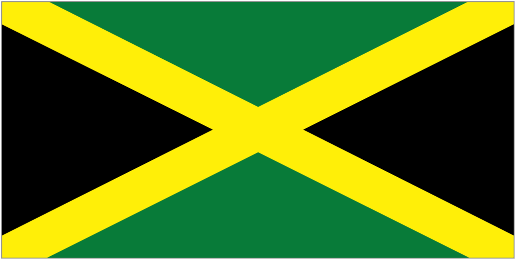
Today I got back from work and heard the news that Heavy D, (his real name being Dwight Arrington Meyers died today at 44,).
Here is a picture of what he looks like.

I'm not to sure of the cause of his death, apparently he was having difficulty in breathing, and died shortly after arriving at hospital.
The full account can be obtained from here:
Brief account on the death of Heavy D
I remember Heavy D, from when I was unemployed and MTV had started, my Mum had just got cable tv (television), we (my cousin and my nephew, niece and myself) used to rush around the tv to watch "Yo MTV Raps", and they had video channel called "The Box", which was a jukebox, and you can request a video. They were our favourite channels.
I loved this video, called "Dem no worry we" - by Supercat featuring Heavy D. I loved the video, it is truly multicultural in a Jamaican styley. Heavy D's performance was sharp and well delivered. Before that time when African-Americans did reggae, it never quite worked according to my mind. But Heavy D, did it superbly. Later, I did find out that he is indeed a Jamaican, no wonder!! Enough of the talk, here's a link to the clip. I hope you enjoy it as much as I do, he brought happiness and joy with his music, thank you Heavy D. I hope he finds true peace where he is now.
Heavy D is better known for the hit "Now that we've found love", but to me "Dem no worry we" eclipses that any day, any time. I still like the song, 20 years later. I didn't like "Now that we've found love" much then and that still remains the case.
Here is the link for "Now that we found love".
"Now that we found love" - by Heavy D
Monday, 7 November 2011
A call to face Africa's challenges from the hills of Rwanda
I came across this article, it was encouraging to read that there are people in Africa, who engage in true talk. I agree with the author (Shyaka Kanuma). A new way of thinking is introduced here.
A new way of thinking from Rwanda
I like this piece, it deals with the prevailing attitude that exists amongst Africans. The sooner people forsake the easy option of blaming outsiders and wake up to the challenges that the continent faces, Africa will get up from it's knees and begin to walk with the rest of humanity (as opposed to being held by the hand and led astray as is currently the case).
Wednesday, 2 November 2011
Our best days may be behind us...

There has been a lot of talk about the world population hitting 7 billion people recently. This has been a source of concern for those who worried about the future of mankind.
In the case of Nigeria, this even more urgent, the last head count says there are 167,912,561 people in Nigeria. The population is increasing at a rate of 5.6 million people per annum. Now to any sensible person, that is a lot of people to add every year.
This wouldn't be so bad, but in the case of Nigeria, this can not be viewed as a outstanding success. Due to Nigeria's failure to hold up any tangible, positive achievement to show the rest of the world. Nigerians are left desperately clasping at straws like saying "Nigeria is the giant of Africa", and "oil". This is rather sad and pathetic to my mind. The oil within Nigeria, has nothing to do with Nigerians manufacturing it, it was there before anyone even knew what oil was, it was (good) fortune that it lay within what is now called Nigeria.
As for the population, children are a good thing. But like any other good thing, you can get too much of it. Nigerians tend to smirk that theirs is one of the largest populations in the world. Why the smirk? Are they the only ones who know how to reproduce? I think not. Is Nigeria the size of Russia, with millions of square miles of fertile and, the answer is again no. Do Nigerians love their children more than anyone else in the world, definitely not. Is there a need for such a large population, given that technology is reducing the need for man power? There is no need for such a large population.
In other parts of the world, controlled population growth goes hand in hand with an ordered society, one where it's citizens are happy to live. In Nigeria population growth is not controlled and this government like all previous governments doesn't regard this as an issue. With a country that is losing significant amounts of agricultural land due to desertification in the north, and soil erosion in the south, along with subsistence farming . The destruction of the environment by the poor to survive (ie collection of firewood etc), accompanied by governments who don't and can't meet their needs, doesn't make for a happy future. With dwindling agricultural land, unsustainable agricultural policies, it seems Nigeria may never again be in the position to feed itself. This accompanied by a lack of an industrial base, or technological base, means future generations will become poorer. Even if the country were to fall apart. The Sahelian region would be least likely to cope with rapid population growth, desertification and climate change, the best they can hope for is to spoil for a war with it's southern neighbour(s), as they have nothing to lose.
Political leadership at the centre (Abuja) is at best weak, and prone to gimmicks, and is myopic in nature. The population at large is hostage to a cocktail of increasing ethnic chauvinism, religious misinterpretation, cultural resistance, intolerance, rampant corruption and mismanagement, which do not make for a bright future. The country has escaped to date, due to the unimaginative solution of exploiting the mineral resources (namely oil and gas deposits), but these are finite and non-renewable, and once exhausted there is nothing in place to generate significant income.
By the year 2020, Nigeria would have surpassed 200 million people. This is more than the population of the whole of Southern Africa (the SADC region (Southern Africa development community) on a fraction of the surface area. The UN (United Nations) estimates that by the year 2050, Nigeria will be the fourth most populous country in the world. (that is a disaster).
To make things even more tricky, how can you urge people to have less children? Even the educated have large families, I've several aunts and uncles who have more than their fair share of degrees and have an average of eight children per family. So if the middle class won't listen, what hope do you have to persuade the poor? In other parts of the world, this is a natural benefit of increasing education, but Nigeria bucks the trend.
Another point to consider, is that Nigerians are satisfied with low standards. Those educated southerners in Nigeria are proud that they have the highest literacy rates in Nigeria, with the south-west with 73.6 per cent, the south-south with 71.9%, and the south-east with 74.1%, the north central has 54.9%, and the other northern regions ie north-west 33.9% and north-east 33.8%.
These figures are taken from
Compare that to Kerala state in Southern India, they have 100% literacy amongst female children, (it goes without saying that for boys it's also 100%), and population growth not just in Kerala but throughout Southern India has reached replacement levels. You can see with this comparison, that there is still a lot of work to do in Nigeria on this front. At it's very best around 26% are uneducated, in the worst case 67% are illiterate.
With future generations facing increasing poverty, conflicts over land and resources will be more common. The best, the educated class can hope for is to escape Nigeria and take up residence, in some other land where the government had the foresight to plan for the future needs of the host population. Nigeria is not blessed like other African nations like DR Congo (Democratic republic of Congo), with large areas of unsettled fertile land with relatively small populations, the crunch time is fast approaching, so there is less room to manoeuvre. It is not by mistake that Nigeria is third world.
Nigeria will soon become synonymous with not just corruption, but how badly can one destroy a country so completely. Other countries will look and say, "well at least we are not as bad as you!" This is all rather tragic because it is avoidable, with some consistent effort.
Monday, 31 October 2011
Le cygne (The Swan): Camille Saint-Saens
I couldn't think of a better way to end the month. I adore Saint-Saens' music, being as influenced as he was by two of my favourite composers, Sebastian Bach and Amadeus Mozart. Saint-Saens famously wrote,
"What gives Sebastian Bach and Mozart a place apart is that these two great expressive composers never sacrificed form to expression. As high as their expression may soar, their musical form remains supreme and all-sufficient".
Camille Saint-Saens (9 October 1835 – 16 December 1921), was a French late-Romantic composer and he is known especially for his 'Carnival of the Animals', a musical suite of fourteen movements, most of which relate to various members of the animal kingdom, from the Lion and the Tortoise, to birds, (Aviary) and fish, (Aquarium). Le cygne is the 13th movement and is the most famous movement of the suite. Enjoy..
Thursday, 13 October 2011
Ghana: Somewhere over the rainbow
The following works were produced and written by Mark S. Luckie and published by UC Berkeley's School of Journalism. I have not obtained copyright permission to reproduce the works here, but have instead chosen to post the links to the various stories. The stories were developed on a reporting trip to Ghana by Mr Luckie during the 50th anniversary of the country's independence from Britain. While there, he discovered the legal and social persecution gays face, how some men, both gay and straight, are driven to gay prostitution for the money and the Ghanaian government's failure to address the problem of HIV/AIDS within the gay community.
(Please click on each of the various titles appearing below to visit the webpage on which the story appears).
Homosexuality is considered evil and disgraceful by many Ghanaians and any public display of affection or accusation of being homosexual could mean swift arrest and jail time under Ghanaian law.
Ghanaians are known for their enterprising spirit and using their resources to sustain themselves financially. For some men, that means selling the only resource they have - their bodies.
Homosexual acts are illegal in Ghana and many in the country blame gay people for the spread of HIV/AIDS, yet there is no government agency that directly targets the prevention of the disease within the gay community.
A look at the HIV/AIDS prevention advertisements in Ghana and how the advertisements lead many gay men and women to believe that HIV/AIDS is a heterosexual disease.
Author's Note: I think the works make for some great reading and starkly enunciate the reality, without being judgemental.
Subscribe to:
Posts (Atom)
-
I received an email today from someone who calls herself Kathy Lagoli. Her email address is kathylagoli@thingdiamond.com. The wording of the...
-
 I cannot but be proud that my roots are in Nigeria, a country of about 150 million people. Of course in modern times there are those aspects...
-
 Author's Note: The idea behind this story is to provoke, and to be thought-provoking at the same time. The story is based on real even...